
Loop 101 trunk relocation near Broadway interchange
ADOT MOT and night drilling windows — permit lead exceeds bore duration; alignment engineered before bid.
Tempe, AZ · Maricopa County
Tempe highway, canal, and Salt River bed crossings on Loop 101, SRP easements, and Rio Salado — long-span HDD and casing when open cut fails ADOT, irrigation district, and flood-control review.
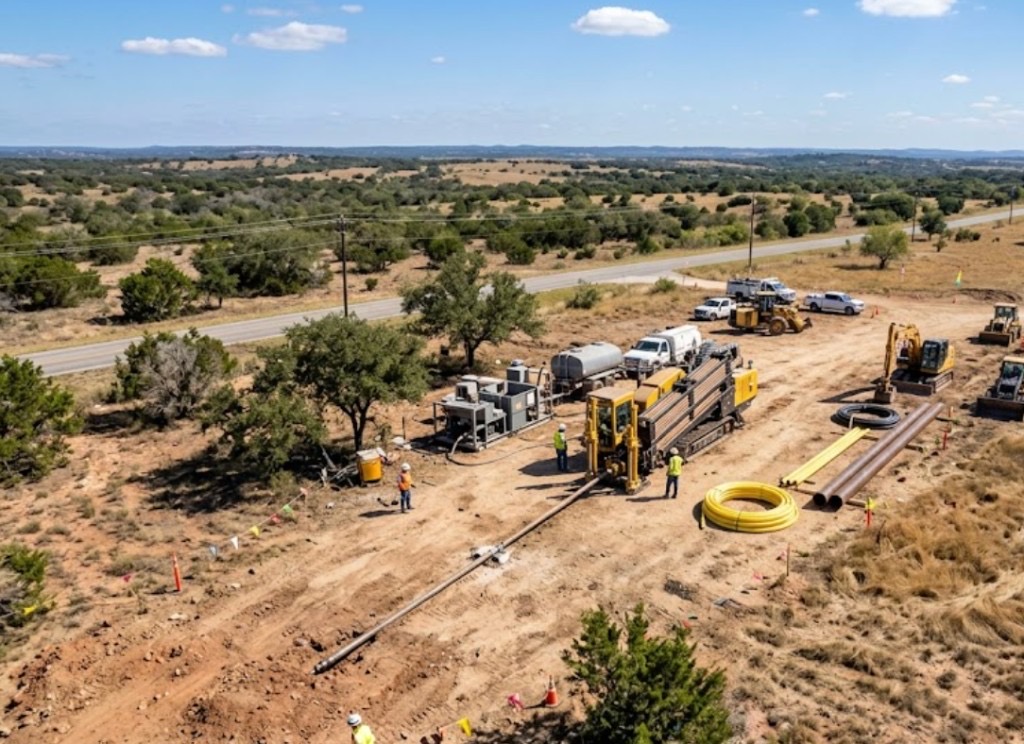
River, highway, and canal crossings in Tempe are where trenchless stops being optional — ADOT relocations on Loop 101 and Loop 202, SRP Arizona Canal paths, and Salt River / Rio Salado bed alignments rarely justify open cut against engineered bore plans when lake park and trail systems are in play.
Directional boring in Tempe at crossing scale means larger spreads, staged reaming, pullback monitoring, and agency calendars that start months before drill day. Traffic control, night MOT, and SRP irrigation windows set the schedule more often than rig availability.
Municipal water and sewer trunks, telecom backbones, and campus-scale electric feeders share corridor headaches — multiple utilities in one casing require engineered dividers and maintenance access, not ad hoc bundling.
Real Maricopa County angles — not generic statewide copy.
ADOT MOT and night drilling windows — permit lead exceeds bore duration; alignment engineered before bid.
Irrigation district and bank stability review — HDD or jack-and-bore profile avoids open cut through easement fill.
Flood-control and Rio Salado review — engineered profile avoids open cut through lake-adjacent alluvium and trails.
City permits and franchise alignment — long shot with staged ream and survey closeout.
Tempe crossing work begins with engineered profile and controlling permit identification — ADOT, SRP, flood authority, or Valley Metro leads notification beyond standard 811. Larger rigs mobilize with mud plants and pullback monitoring; inspection milestones follow agency documents. As-built survey delivers before final restoration.
Tempe sits on Salt River alluvium and caliche hardpan with Papago foothill granite cobble on east-side shots — lakebed and Rio Salado fill change mud programs block to block.
Most Tempe bores hit caliche crust between 2 and 7 feet, then Salt River alluvium or compacted urban fill depending on distance from the lake bed. Papago fringe and east Tempe shots add decomposed granite cobble that slow penetration without correct tooling. Rio Salado grading can hide old canal structures and debris lenses that potholing catches before pits are sized. Shallow groundwater along Tempe Town Lake and the Salt River bed raises buoyancy risk on long HDPE pulls — we size ream stages for Tempe fill, not a generic suburban template.
Urban heat island, monsoon outflows from the Salt River bed, and afternoon lightning holds shape Tempe bore schedules — lake-adjacent groundwater and wash runoff are planned into quotes.
Monsoon season from July through September raises lake-adjacent groundwater and can delay entry pits on Rio Salado fill. Spring dust on exposed Papago fringe pads affects cage and fluid handling along Broadway. Summer urban heat slows morning startup on Mill Avenue sites but rarely stops work — we communicate when dry conditions matter for caliche-heavy pits rather than risk frac-outs toward Tempe Town Lake.
City of Tempe Development Services, Maricopa County ROW, ADOT District, SRP canal easements, Valley Metro light-rail coordination, and Sky Harbor-adjacent review apply on many alignments.
Inside Tempe city limits, street cuts, driveway removals, and lake-adjacent work may need Development Services permits. Maricopa County ROW rules apply on unincorporated pockets toward the south fringe. ADOT controls Loop 101, Loop 202, and state highway bores — expect traffic control plans and sometimes night-only windows on Mill Avenue frontage. SRP canal easements and Valley Metro light-rail ROW add coordination beyond standard 811. Sky Harbor-adjacent parcels may add FAA and security review on pit placement.
Major Tempe crossings rarely justify open cut — detour cost, lake and canal impact, and lane closure math favor trenchless once alignment is approved. Short local street bores are a different scope than mile-class highway crossings.
Length, diameter, groundwater, environmental windows, flagging, engineering, inspection.
You share plans or describe the problem; we confirm alignment, depth, access, and which trenchless method fits Arizona soils.
Arizona 811 ticket filed; two business days minimum before pits open unless your permit path differs. We pothole where marks conflict.
Bore plan, ADOT or city ROW permits, railroad agreements, and crossing engineering when the path leaves private property.
Compact spread for tight Scottsdale lots; larger HDD for I-17 or Loop 101 relocations — matched to length and diameter.
Steered pilot on design line, ream passes sized for your pipe or casing, fluid program tuned for caliche or decomposed granite.
HDPE fusion, steel casing, or multi-duct bundle pulled with tension and bend-radius monitoring.
Pressure test, mandrel, or survey records for owners, inspectors, and operators as spec requires.
Compact pits, replace gravel or hardscape per scope, leave 811 ticket and locate map in your project file.
District and scope drive weeks-to-months — assume permits before drill date, not parallel to mobilization.
Possible with engineered dividers and maintenance access per owner spec — not improvised bundling.
Salt River bed, Tempe Town Lake fringe, SRP Arizona Canal, and Rio Salado each carry different easement and access rules.
Yes — SRP templates with inspection and restoration standards; irrigation district agreements often set the critical path.
Length, diameter, groundwater, MOT, irrigation windows, and inspection drive price — engineered quotes only.
24/7 — Emergency dispatch statewide. Tell us entry, exit, pipe size, and county — a bore specialist calls back with cost drivers, not a flat rate.
Scope your alignment
Step 1 of 2 — path, pipe, and city first