
Union Pacific casing near south Tucson industrial spur
Railroad template with welded inspection and flagging — drive pit dewatering in variable fill near track grade.
Tucson, AZ · Pima County
Jack and bore casing on Tucson rail spurs and wash structures — straight steel pushes when Union Pacific templates and ADOT specs require rigid carrier protection.
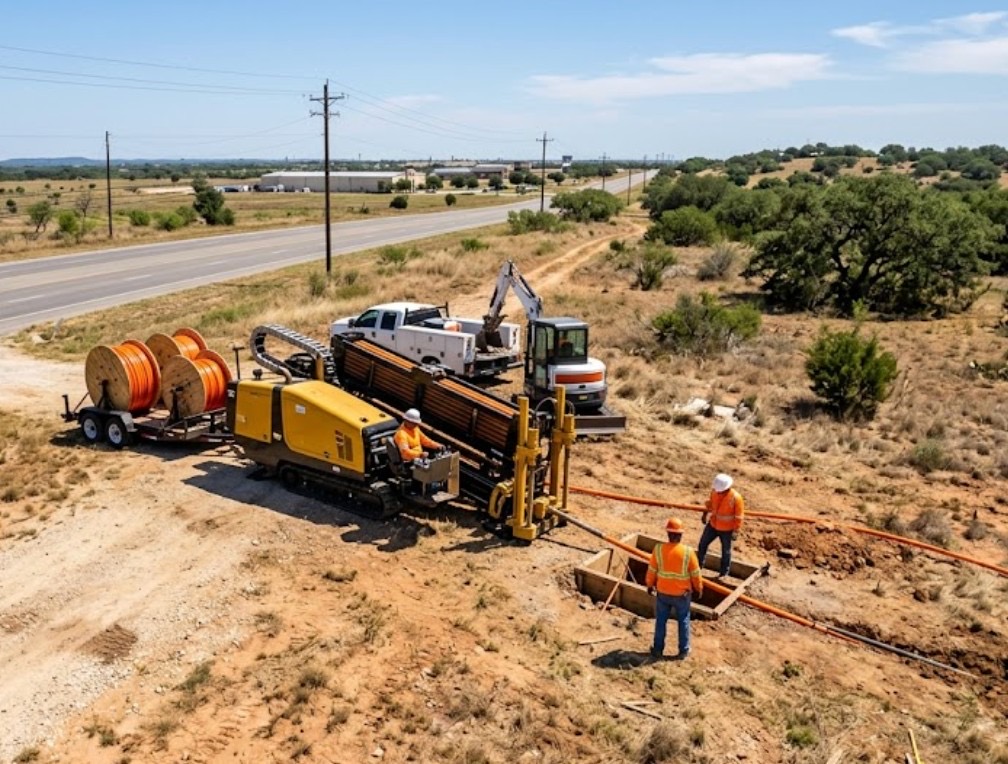
Auger boring in Tucson fits Union Pacific agreements along industrial spurs, storm outfalls toward Rillito and Santa Cruz washes, and straight runs under approach slabs where casing grade matters more than steerable flexibility. Shored pits handle valley sand sidewalls and foothill caliche.
Directional boring in Tucson handles curves and long HDPE on residential laterals; jack and bore wins when the engineer specifies welded casing under rail embankment or highway approach on a line-and-grade push. Railroad flagging windows often set the calendar before jack footage does.
Pima County flood-control levees and wash bank structures favor cased crossings over open cut through saturated fill — auger bore scopes dewatering and inspection per district detail when applicable.
Real Pima County angles — not generic statewide copy.
Railroad template with welded inspection and flagging — drive pit dewatering in variable fill near track grade.
Straight RCP push where slope stability blocks open cut — groundwater and flood-control holds scoped upfront.
Short rigid carrier under mixed-use hardscape — grade control on 50-foot push beats HDD tolerance on some municipal details.
ADOT detail with internal dividers for telecom and electric — jack sets shell before internal pulls.
Tucson auger bore starts with pit layout on survey line — locates cleared, shoring for caliche or granite sidewalls, dewatering when wash-adjacent groundwater enters the drive pit. Casing advances on line and grade; railroad flagging and welding inspection follow owner templates.
Pima County mixes Catalina foothill decomposed granite, valley caliche, and Santa Cruz alluvium — mountain fan cobble slows pilots on east-side and foothill shots.
Most Tucson bores hit caliche crust between 2 and 7 feet, then alluvial sand or decomposed granite depending on distance from the Catalinas. East-side and foothill shots add mountain fan cobble and fractured granite that slow penetration without correct tooling. Central Tucson parcels on old acequia fill can hide debris lenses that stall reaming if geotech is skipped. Shallow groundwater along the Santa Cruz and Rillito corridors raises buoyancy risk on long HDPE pulls — we size ream stages and pullback tension for Pima County fill, not a Phoenix valley-only template.
Sonoran heat, foothill wind, and July–September monsoons shape Tucson bore schedules — Rillito and Santa Cruz wash runoff and afternoon lightning holds are built into quotes.
Monsoon season from July through September is Tucson's biggest calendar variable. Saturated alluvial clay softens ROW and can delay entry pits; Rillito and Santa Cruz channels carry debris after cloudbursts. Spring wind on exposed east-side pads affects cage and fluid handling. Summer heat above 105°F slows morning startup on exposed sites but rarely stops work — we communicate when dry conditions matter for granite-heavy pits rather than risk frac-outs toward a wash.
City of Tucson Development Services, Pima County ROW, ADOT District, Santa Cruz floodplain, and Union Pacific rail agreements apply on many alignments.
Inside Tucson city limits, street cuts, driveway removals, and wash-adjacent work may need Development Services permits. Pima County ROW rules apply on unincorporated pockets toward Marana and Vail. ADOT controls I-10, I-19, and state highway bores — expect traffic control plans and sometimes night-only windows. Union Pacific agreements govern rail-yard-adjacent crossings. Historic districts near Downtown and Barrio Viejo may add review on pit placement and surface restoration.
Jack and bore preserves rail and highway pavement width on short straight obstacles. Curved sewer without casing shifts to HDD. Open-cut across Union Pacific ROW is rarely permitted versus cased templates.
Casing size, drive length, pit depth, groundwater, rail or highway flagging, and welding inspection.
You share plans or describe the problem; we confirm alignment, depth, access, and which trenchless method fits Arizona soils.
Arizona 811 ticket filed; two business days minimum before pits open unless your permit path differs. We pothole where marks conflict.
Bore plan, ADOT or city ROW permits, railroad agreements, and crossing engineering when the path leaves private property.
Compact spread for tight Scottsdale lots; larger HDD for I-17 or Loop 101 relocations — matched to length and diameter.
Steered pilot on design line, ream passes sized for your pipe or casing, fluid program tuned for caliche or decomposed granite.
HDPE fusion, steel casing, or multi-duct bundle pulled with tension and bend-radius monitoring.
Pressure test, mandrel, or survey records for owners, inspectors, and operators as spec requires.
Compact pits, replace gravel or hardscape per scope, leave 811 ticket and locate map in your project file.
Casing templates and straight alignments favor auger bore. Curved HDPE paths favor HDD. We review the engineer method note before quoting.
Physical jacking may finish in days; Union Pacific agreements often drive weeks-to-months lead. Quote includes flagging scope.
Running sand and mountain fan cobble without dewatering can stall progress. Test pits reduce surprises near wash fill.
Yes when plans specify casing and gravity grade on a straight push. Large trunks may need microtunneling.
24/7 — Emergency dispatch statewide. Tell us entry, exit, pipe size, and county — a bore specialist calls back with cost drivers, not a flat rate.
Scope your alignment
Step 1 of 2 — path, pipe, and city first